When we think of the iconic Supermarine Spitfire, our minds often go straight to the combat pilots in the thick of battle. Yet behind every mission was another extraordinary group of aviators, tasked with ferrying aircraft from factories to operational squadrons, ensuring that Britain’s front-line pilots had the planes they needed. One of the most remarkable of these pilots was Jackie Moggridge, a pioneering woman whose story continues to inspire.
Born in South Africa in 1922, Jackie developed a passion for aviation at an early age. By her late teens, she had travelled to the UK to pursue a career as a commercial pilot, an ambition that was rare for women at the time. When the Second World War broke out, she offered her services to the RAF, only to be turned away simply because she was female. Undeterred, she joined the Women’s Auxiliary Air Force (WAAF), initially working on radar operations during the Battle of Britain. Watching the air war unfold sparked a determination in Jackie to get into the cockpit herself.
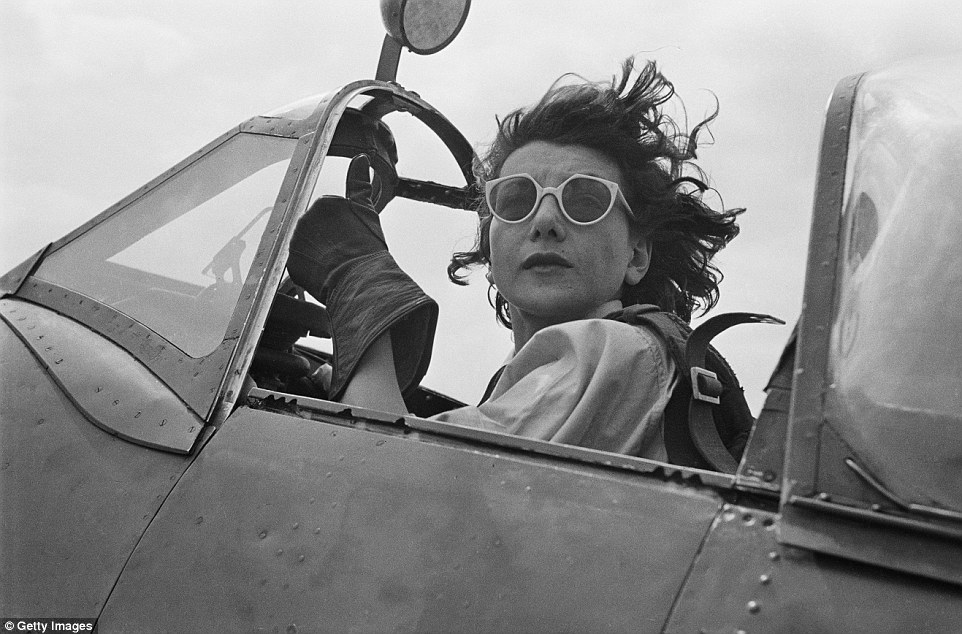
Her opportunity arrived in 1940 when she joined the Air Transport Auxiliary (ATA), becoming one of the youngest female pilots in the organisation. The ATA was responsible for delivering aircraft from factories and maintenance units to operational squadrons, a vital but dangerous role. Jackie quickly proved her skill and bravery, ultimately delivering 1,348 aircraft and flying 83 different types of aircraft during the war, as well as flying an astonishing 668 Spitfires in her lifetime.
Jackie is quoted as saying: “There was one aircraft, the most illustrious of all, which I longed to fly. The Spitfire, a machine with the simplicity of features of a beautiful woman, stood outside the hangar basking as proudly as a thoroughbred in the warm sunshine. I clambered into the cockpit as warily as a rider mounting a highly spirited stallion and sat gazing absently at the instruments. It seemed the most natural thing in the world to be sitting there in the cockpit, as though my entire life had led to this moment. A few seconds later I found myself soaring through the air in a machine that made poetry of flight. Carefully I familiarised myself with the controls as the ground fell away at fantastic speed and felt exhilarated by the eager, sensitive response. Singing with joy and relief I dived and climbed and spiralled around the broken clouds, before turning on to course.“
The life of an ATA pilot was far from easy. Pilots flew alone, often without radios, in all weather conditions, and had to navigate using maps and instinct. Jackie faced unique challenges as a woman in an aircraft designed for men. Her daughter shares a vivid memory: when Jackie first noticed the Spitfire’s funnel and asked the engineer if it was for air sickness, he replied, “That’s for gentleman pilots, madam.” Female pilots, Jackie explained, simply had to endure the conditions, sometimes flying all the way to Scotland in the bitter cold.
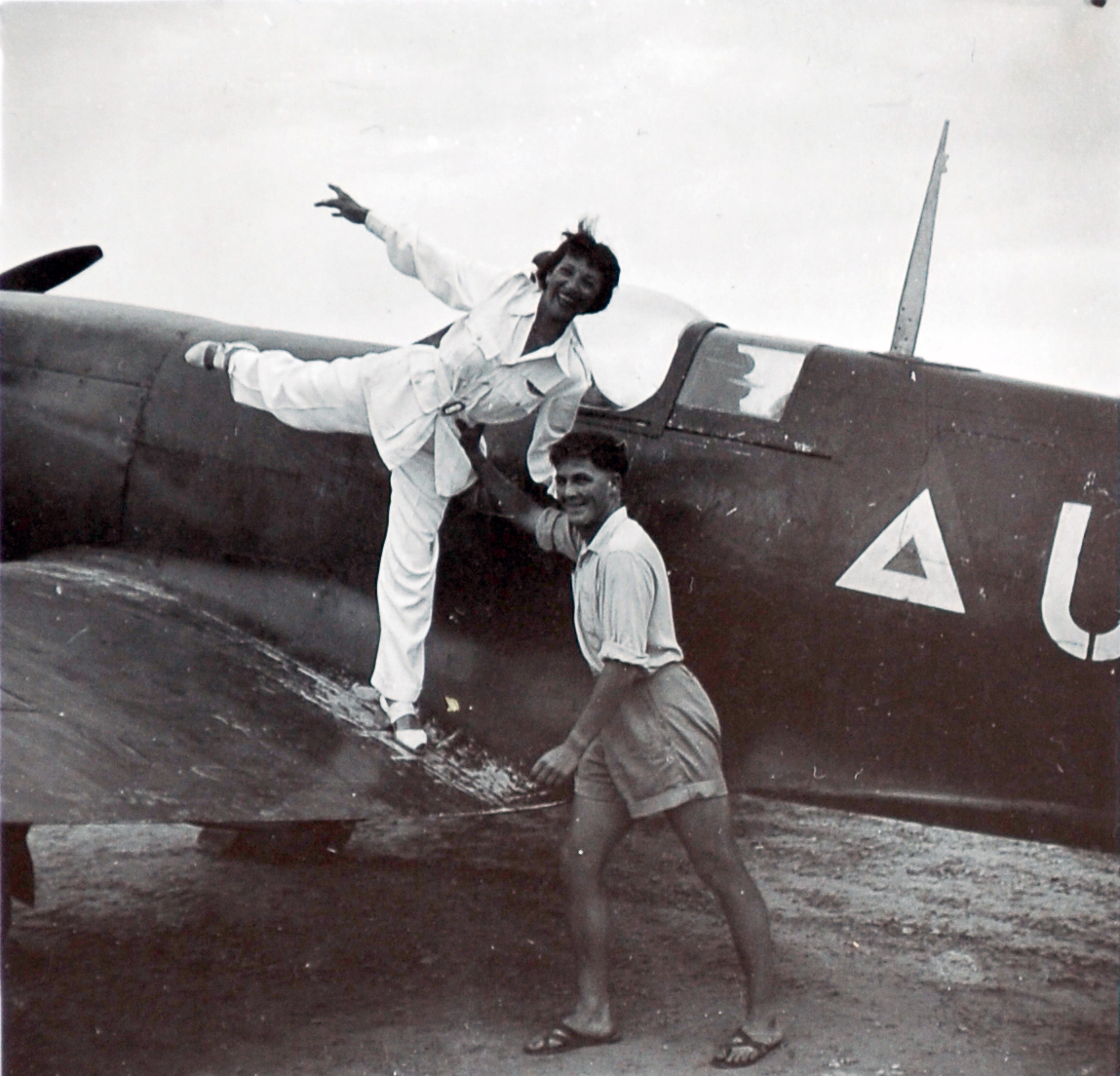
After the war, Jackie’s pioneering spirit did not wane. She joined the Women’s RAF and earned her RAF wings. Later, she participated in long-distance ferry flights, delivering Spitfires from Israel to Burma, completing six trips with multiple refuelling stops. She went on to break further barriers, becoming Britain’s first female airline captain, a trailblazer for generations of women in aviation.
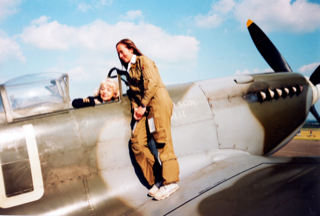
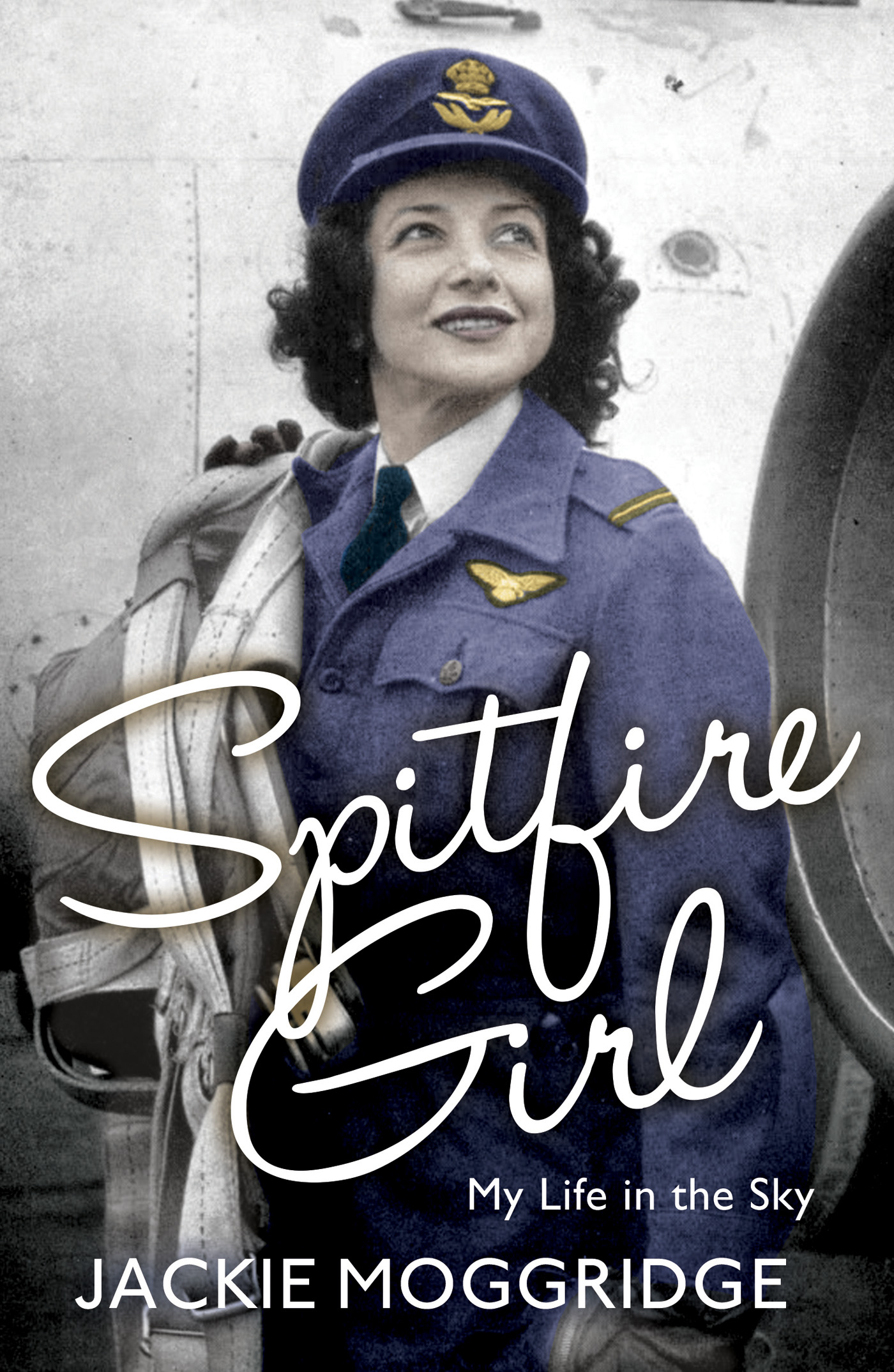
Jackie’s achievements have been preserved in her autobiography, Spitfire Girl: My Life in the Sky, and her legacy continues through initiatives such as the Jackie Moggridge Spitfire Award. Her daughter, Candy Adkins, shares her mother’s memorabilia, logbooks, and personal stories, ensuring that the experiences of women ATA pilots are remembered. Jackie even revisited one of the Spitfires she flew during the war, ML407, fifty years later, and her ashes were scattered from it—a fitting tribute to a life spent in the skies.
Her story reminds us that the Spitfire is more than a machine; it is a symbol of courage, skill, and the often-overlooked contributions of individuals like Jackie Moggridge. At the National Spitfire Project, we are committed to preserving these stories, keeping the legacy of pilots, engineers, and trailblazers alive for future generations.
Jackie Moggridge’s story is a testament to determination, resilience, and breaking barriers. It demonstrates that while aircraft may win battles, it is the people behind them who truly make history.
Privacy Policy & Cookie Policy
All content © 2026 National Spitfire Project National Spitfire Project, Registered Charity No. 1158286
Website designed and built by MindWorks Marketing